Writing and Printing Paper: Specifications, Uses & Buying Guide for B2B Buyers
Selecting the right writing and printing paper can make or break the output of a print run, a textbook order, or a corporate stationery project. This guide walks B2B buyers through specifications, product forms, applications, sourcing strategies, and sustainability options-everything needed to place confident, cost-effective orders.
Introduction to Writing and Printing Paper
In the Indian paper trade, writing and printing paper refers to all uncoated and lightly finished pulp-based grades used for textual reproduction, handwriting, copying, book interiors, and stationery. It is distinct from packaging grades such as kraft and corrugated boards, which prioritise tear resistance and bulk, and from newsprint, which is a thin low-cost paper used for newspapers and flyers with lower brightness and shorter lifespan.
Writing and printing papers are classified by weight, texture, and coating. Common formats include cut sheets in A4 and A3 sizes, folio sizes around 58.5 × 91 cm, bulk sheets, and reels for web-offset printing. Typical GSM values span 55 to 120, covering everything from thin school notebooks to premium letterheads.
Why does the choice matter? High-quality paper ensures smooth writing and crisp printing, which directly affects output sharpness, press runnability, and document longevity. Variation in opacity or moisture can lead to show-through, misfeeds, or premature yellowing-problems that cost time and money at scale.
Vrinda Papers Pvt. Ltd., founded in 2004 and based in delhi NCR, operates as a B2B distributor and converter supplying both prime-lot and stock-lot writing printing paper products across india. With over two decades of experience, the company handles mill-fresh supplies, cost-effective surplus inventories, and customised orders in multiple formats.
Key Technical Specifications of Writing & Printing Paper
The first specification every buyer evaluates is GSM-paper thickness is commonly measured in GSM (grams per square meter), and paper weight is measured in pounds or grams per square meter depending on the market. For writing and printing grades, the most traded values are 60, 70, 75, 80, and 100 GSM. Bulk, or volume per unit weight, connects directly to opacity and stiffness; higher-bulk sheets feel thicker at the same GSM and reduce show-through.
Brightness affects how printed colors and text appear on paper. Standard maplitho or copier paper grades sit between 80 and 95 percent on the ISO 2470 scale. High-brightness paper has brightness levels above 90%, and higher brightness makes printed text and colors more vivid-a priority for marketing collateral and exam papers alike. Opacity prevents ink from showing through to the other side of the paper; most serious print work demands opacity above 85–90 percent, as specified under IS 1848 (Part 1):2018, the governing Indian standard for this category.
Writing and printing paper is available in various textures and colors. Different paper finishes affect the appearance and usability of the paper: a smooth surface reduces dot gain and ink bleed, delivering sharper halftones for text and fine graphics, while a vellum or rougher finish absorbs ink differently and suits certain aesthetic purposes. Smooth finishes work best for sharp inkjet or laser printing. Super-calendered surfaces add a light gloss through mechanical compression.
Shade options range from cool white, which offers crisp contrast for corporate printing, to natural or cream tones preferred by publishers for textbooks and novels because they reduce eye strain. High-grade chemical wood pulp is used in production of premium grades, contributing to strength and consistent formation.
Acid-free paper resists yellowing and deterioration over time, making it ideal for archival purposes. It maintains legibility for extended periods, which is why legal records, library collections, and government archives specify pH-neutral grades with surface pH above 6.5. Moisture content also matters: optimal levels sit around 4–6 percent. Deviations cause dimensional instability, curl, and registration errors on high-speed printers and offset presses.
Product Forms: Reels, Ream-Packed Sheets and Sheet Form
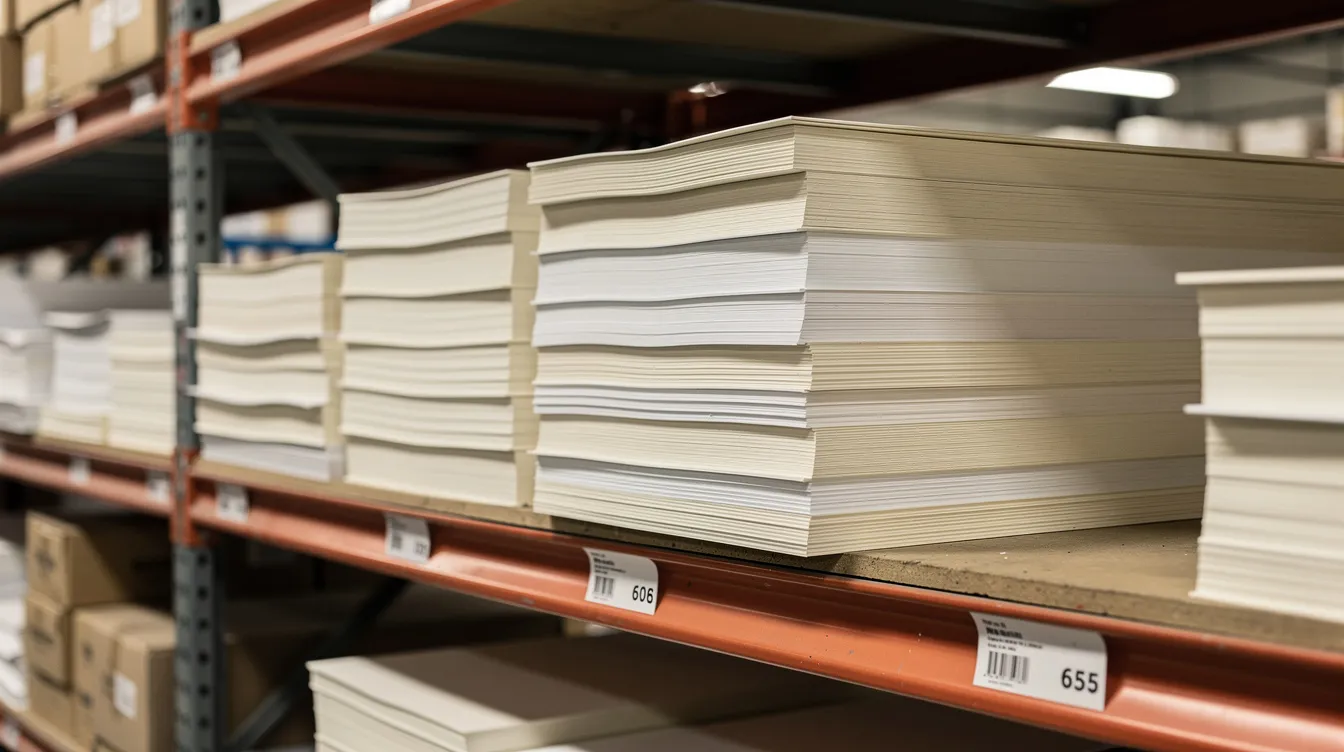
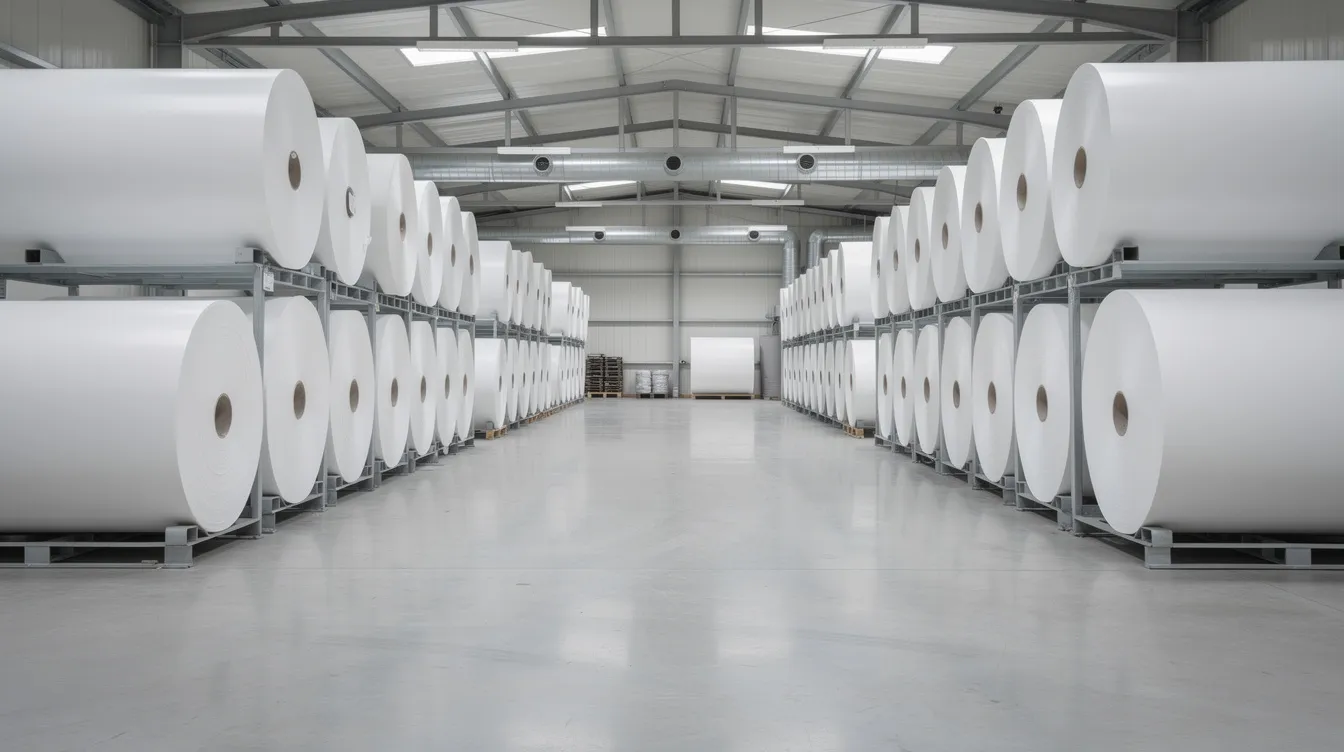
Paper reaches B2B buyers in three main supply forms. Reels, or jumbo rolls, are continuous rolls wound at the mill and used in web-offset printing for large-volume jobs like textbooks, notebooks, and periodicals. Ream-packed cut-size refers to pre-cut sheets, typically A4 or A3, bundled into reams of 500 or 250 sheets for office and institutional use. Bulk sheet form involves larger flat sheets-folio size or custom dimensions-supplied in bundles for sheet-fed offset or digital presses.
Commercial printers running long book or newspaper jobs choose reels because web-offset presses consume paper continuously, reducing downtime. Sheet form suits sheet-fed offset, digital presses, and die-cutting operations where individual sheets pass through the press one at a time. Copy paper is generally 70–80 GSM and uncoated, while standard copy paper is 75–80 GSM-these are the dominant specifications for ream-packed office supplies. Paper is compatible with all types of printers and copiers in these standard weights, and custom sizes include A4, A3, and special requirements.
Consider a few concrete scenarios. A corporate office orders 70 GSM A4 copier paper in 500-sheet reams for daily printing and copying needs. A commercial printer producing multicolour brochures specifies 80 GSM folio sheets to achieve better ink holdout and stiffness. A textbook publisher ordering 500,000 copies selects 65 GSM reels for web-offset to maximise production speed and minimise edge waste.
For B2B buyers, logistics matter: palletisation standards, minimum order quantities driven by full jumbo rolls or truckloads, and the switch from sheet form to reels for long runs can meaningfully reduce wastage at cut edges and lower per-unit cost.
Applications: Where Writing & Printing Papers Are Used
Writing and printing papers serve various applications across education, corporate, publishing, government, and stationery segments. Paper can be tailored for various applications like notebooks and reports, and understanding the end use helps buyers lock in the right grade.
In education, textbooks, workbooks, exam papers, and notebooks for schools and colleges across india typically use 60–70 GSM woodfree uncoated paper in reel or sheet form. Government tenders for educational printing often require brightness of at least 85 percent and opacity above 90 percent to ensure legibility. Lightweight paper is suitable for drafts and newspapers, and newsprint serves that purpose, but classroom materials demand higher durability and brightness.
For corporate and office use, uncoated papers are best for writing and everyday office work. Copier paper, internal reports, invoices, and presentations run on 75–100 GSM printing paper with high brightness. Bond paper is a durable high-quality paper often used for letterheads and resumes, while common types of writing and printing papers include bond paper, book paper, and cardstock. Cardstock is thicker and heavier than standard paper, suitable for items requiring rigidity such as business cards and folder covers. Premium covers are typically 170–250 GSM, and heavier GSM papers provide greater stiffness and durability for covers. Standard copy paper is 75–80 GSM while heavy cardstock is 200+ GSM.
In publishing, novels and journals favour 70–90 GSM with high opacity to prevent show-through, while magazine inserts and annual reports may use lightweight coated paper for sharper image reproduction. Coated papers excel for high-quality color printing in catalogues and glossy periodicals. Fine art paper is high-quality paper designed for art reproductions, and photo paper is designed to maximize color saturation and sharpness in photographic printing-both specialty grades that sit alongside standard writing and printing ranges.
For stationery and specialty products-diaries, envelopes, pads, certificates, and corporate stationery-buyers often require acid free or textured grades, sometimes in ivory or cream shades with embossed textures or watermarks for a premium feel.
Prime-Lot vs Stock-Lot Printing Papers
Prime-lot paper is mill-fresh, manufactured to order with documented quality, consistent shade and GSM, and accompanied by mill test certificates. Stock-lot paper, by contrast, is surplus inventory: overproduction, discontinued shades, side-runs, or odd sizes that mills release at lower price points.
Many printers and converters choose stock-lot writing and printing paper for cost-sensitive projects. Inner pages of notebooks, practice worksheets, promotional flyers, and internal training manuals rarely need perfect shade matching, making stock-lot a practical path to significant savings without sacrificing readability.
Buyers should expect certain differences. Stock-lot reels may come in non-standard widths. Sheet sizes can vary within a lot. Shade consistency across sheets may be looser, and GSM can shift slightly within a consignment. Storage history may also affect moisture or yellowing risk. Prime-lot supplies are more predictable, often imported or from large integrated mills, and come with certification.
Vrinda Papers sources both types. For prime-lot, the team arranges consistent mill supplies with full documentation. For stock-lot, procurement comes from Indian and overseas mills with excess inventory; material is graded, inspected for GSM accuracy and shade, and checked for defects before dispatch.
Here is a practical scenario: a publisher prints a flagship catalogue on prime-lot 80 GSM maplitho for colour fidelity and consistent appearance, but switches to stock-lot 70 GSM for internal training manuals where minor shade variation is acceptable. A notebook manufacturer uses stock-lot 60 GSM for student exercise books, reserving prime-lot for branded premium notebooks where shelf appeal matters.
Eco-Friendly, Recycled and FSC-Certified Options
Sustainability has become a procurement criterion, not just a preference. Since around 2015, demand in india for recycled paper, FSC-certified fibre, and responsibly sourced pulp has risen sharply. FSC India data show that Chain-of-Custody certificates in the paper sector have increased more than 250 percent in five years.
FSC certification comes in three labels: FSC 100% (entirely from certified forests), FSC MIX (blend of certified, controlled, and recycled fibre), and FSC Recycled (100 percent recycled content). These labels ensure traceability and meet institutional sustainability mandates from universities, government bodies, and multinational buyers. Recycled paper is produced from post-consumer waste and is an environmentally friendly choice that reduces landfill burden and virgin fibre demand.
Modern recycled writing and printing paper has improved significantly. Mills now produce recycled grades with brightness in the 70–90 percent ISO range through advanced deinking, refined pressing, and post-treatment. Opacity and stiffness are comparable to virgin-fibre grades for most office and educational applications, and the paper runs well on both offset and digital presses. Acid free and chlorine-free (ECF/TCF) processes add environmental and archival benefits, ensuring documents remain legible for decades.
Vrinda Papers can source eco-friendly grades, mix prime-lot and recycled options in a single shipment, and advise buyers on switching to greener stock without compromising print quality. This flexibility helps institutions meet their commitment to sustainability without overhauling their entire procurement process.

Choosing the Right Paper for Your Printing Application
Buyers regularly ask the same questions: what GSM, what finish, reels or sheets? The answers depend on the application, the print process, and the budget. Here is practical guidance.
For textbooks and workbooks, 60–70 GSM natural or cream shade with opacity above 90 percent delivers comfortable readability at competitive price. For office copier paper, 75–80 GSM cool white with brightness above 82 percent is the standard; printers and copiers handle this weight reliably in high volumes. For high-end brochures and catalogues, 90–100 GSM woodfree coated paper or super-calendered grades provide the smooth surface and ink holdout needed for professional results. For legal, archival, or government records, specify acid free paper with pH-neutral sizing and brightness above 80 percent.
Print process compatibility matters. Offset presses perform best on paper with controlled surface sizing that limits dot gain and ensures crisp halftones. Digital presses-laser and inkjet-demand uniform thickness and controlled moisture for consistent toner adhesion and minimal curl. ISO 9001:2015 certification ensures quality and durability across manufactured batches, giving buyers confidence in consistency. Custom orders can meet specific project and organisational needs when standard grades fall short.
Balancing cost versus exceptional performance is a constant exercise. A 70 GSM grade is sufficient for most educational and internal office printing; stepping up to 90–100 GSM is justified for client-facing presentations, annual reports, and premium stationery where the tactile quality of the paper conveys brand purpose and excellence. Vrinda Papers'' team works with printers and brand owners to finalise specs through sampling, test runs, and matching mill capabilities to buyer requirements-so you don''t wait for a full production run to discover a mismatch.
Customized Orders, Conversion and Branding
Beyond standard A4 and A3, B2B buyers frequently need custom sizes: special folio dimensions, cut-to-size sheet form matched to press beds, or trimmed reels aligned to specific web widths. These requirements are routine for commercial printers and publishers whose press configurations vary widely.
Value-added services extend to branding and finishing. Logo customization is available upon request-watermarks, pre-printed letterheads, coloured tints, and embossed textures for premium stationery are all achievable through conversion. A corporate chain, for instance, might order 75 GSM branded copier paper in 500-sheet reams with a corner watermark, while a publishing house commissions custom 90 GSM cream wove for its signature book series.
Vrinda Papers operates as both a converter and importer, taking jumbo reels from domestic or international mills-including sources in turkey and other exporting countries-and converting them into finished sheets or ream-packed products. The ordering process is straightforward: share the GSM, size, shade, reel or sheet form, quantity, and print process details, and the team returns an accurate quotation with lead time estimates.
This capability turns ideas and creativity into tangible products. Whether you need carbonless paper sets for invoicing, offset paper for a journal run, or personalised stationery for a hotel chain, the conversion infrastructure handles it.
Logistics, Quality Assurance and How Vrinda Papers Supports B2B Clients
Since 2004, Vrinda Papers has coordinated multi-mill supplies to printers, publishers, and packaging units across delhi NCR and other regions of india. Over these years, the company has built a process designed to reduce risk for buyers handling large, specification-sensitive orders.
Quality assurance steps include visual inspection of every consignment, random GSM and caliper checks, damage verification during unloading, and sharing of mill test reports where available. For stock-lot consignments, additional shade grading and moisture spot-checks help ensure the material meets the buyer''s minimum requirements before dispatch.
Logistically, Vrinda Papers stocks multiple grades of printing paper, boards, and kraft under one roof. This allows consolidation of mixed orders-writing and printing grades, packaging boards, and specialty products-into a single dispatch, reducing freight cost and coordination overhead. Delivery formats range from full truckloads and containers to partial loads for nearby locations. Lead time for prime-lot orders may include import scheduling; stock-lot is typically quicker but requires upfront quality verification.
Ongoing account management rounds out the service: forecasting support ahead of exam seasons or book-fair cycles, seasonal planning for stationery demand, and responsive communication via phone or email so buyers never have to wait for critical updates. Whether the need is personal stationery for a boutique brand or a 200-tonne textbook order, the making of a reliable supply chain starts with a single conversation.
If you have specific writing and printing paper requirements-a particular GSM, shade, format, or sustainability certification-reach out to Vrinda Papers for sampling, specifications, and competitive pricing tailored to your project.