Cheap Paper vs Quality Paper: The Hidden Costs
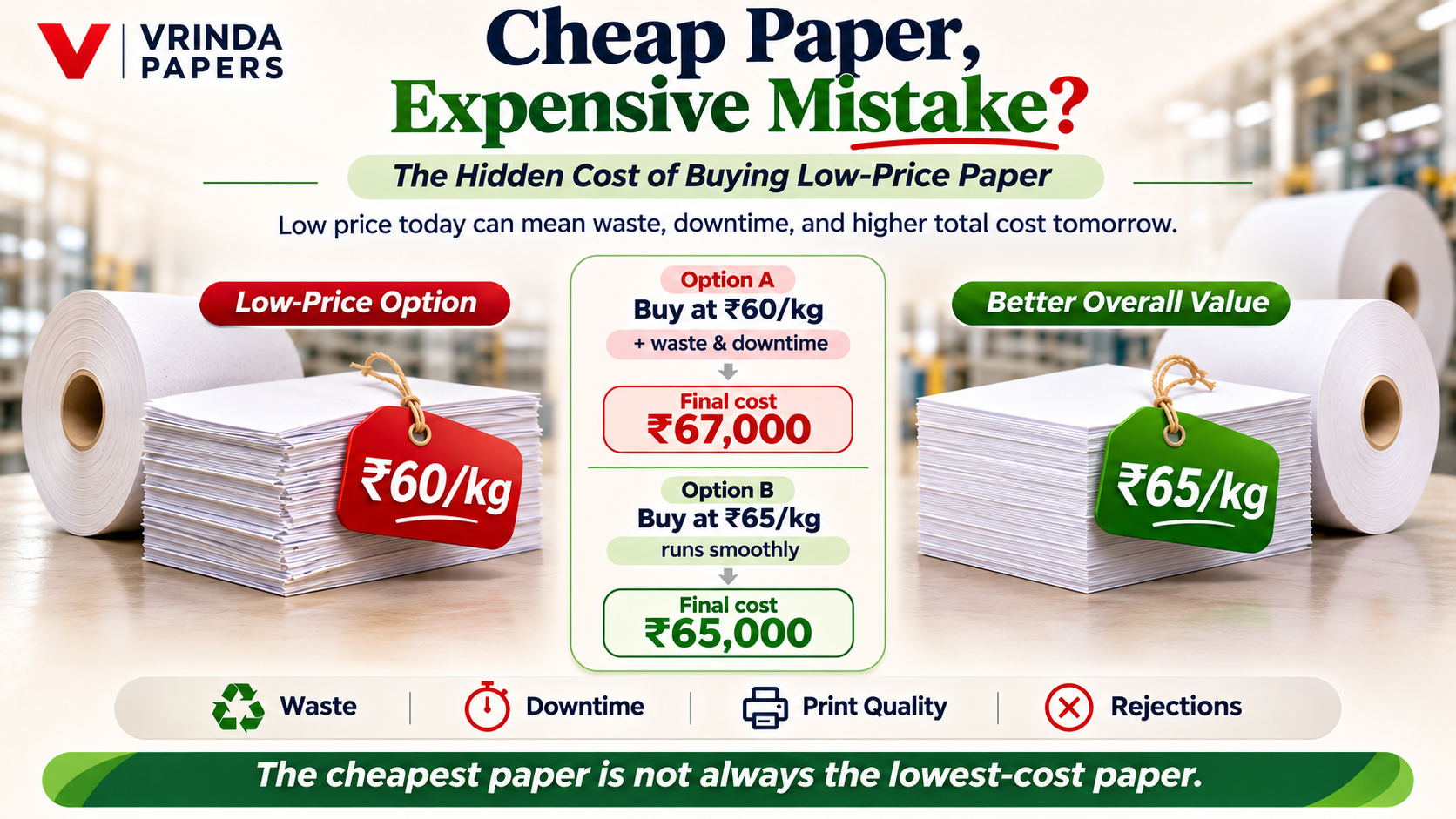
Cheap Paper, Expensive Mistake? The Hidden Cost of Buying Low-Price Paper!
The lowest paper price might look like a great deal - until the hidden costs start adding up!
Imagine saving ₹5 per kg on paper, only to lose thousands in printing waste, machine downtime, and rejected orders.
Sounds surprising? It happens when businesses focus only on the purchase price and overlook paper performance.
In the paper industry, cheaper doesn't always mean more economical.
For printers, publishers, packaging manufacturers, and bulk paper buyers, the right paper can make a significant difference to production costs and profitability.
Let's uncover the hidden costs that every paper buyer should know!
1. The ₹5 Saving That Can Turn Into a ₹5,000 Mistake!
Picture this.
You're purchasing paper for a large printing order.
One supplier offers paper at ₹60 per kg. Another offers it at ₹65 per kg.
The first deal looks like an obvious winner!
But what if the cheaper paper causes feeding problems, printing defects, or additional wastage?
Suddenly, the money you saved on purchasing starts disappearing during production.
Paper Insight: A low purchase price is attractive. A low total production cost is profitable.
The smartest buyers don't just ask, "What's the price?"
They ask, "What's the actual cost of using this paper?"
2. Every Rejected Sheet Is Money Going Into the Waste Bin!
A sheet of paper might cost only a few rupees, but wasted sheets can quickly become expensive.
When paper quality is inconsistent or unsuitable for a particular process, businesses may experience:
Uneven printing results
Excessive paper dust
Feeding and alignment problems
Higher rejection rates
Additional production waste
Imagine running a printing job with thousands of sheets.
Even a small increase in rejected sheets can affect the final profit.
And here's the catch!
You're not just wasting paper. You're also wasting ink, electricity, machine time, and labour.
Paper Hack: The real saving isn't always in buying cheaper sheets. It's in reducing the number of sheets you waste.
Also Read:https://vrindapapers.com/blog/how-old-paper-gets-a-new-life-through-recycling
3. Your Printing Machine Doesn't Care About Discounts!
You may have purchased paper at a fantastic discount.
But your printing machine only cares about one thing - whether the paper runs properly!
Paper with unsuitable moisture, surface characteristics, or dimensional stability may contribute to:
Frequent paper jams
Uneven ink absorption
Registration problems
Additional machine adjustments
Production delays
Every unexpected machine stoppage can increase operating costs.
A slightly higher-priced paper that runs consistently may help maintain smoother production.
Remember: A cheaper paper that slows down your machine can become an expensive choice.
4. The Wrong Paper Can Make a Great Design Look Bad!
Imagine spending hours creating a beautiful brochure.
The colours are perfect. The design looks professional.
But after printing, the colours appear dull, the text lacks sharpness, and the finish doesn't look right.
What went wrong?
Sometimes, the problem isn't the design or the printing machine.
It's the paper!
Paper surface, brightness, opacity, and ink compatibility all influence the final printing result.
Choosing unsuitable paper can affect:
Colour reproduction
Image sharpness
Print consistency
Folding and finishing
Overall product appearance
For businesses, poor results can lead to customer complaints, rejected jobs, and reprinting expenses.
A premium design deserves paper that can deliver the required result!
5. The Hidden Bill: What Cheap Paper Can Really Cost
Let's understand this with a simple example.
A printing company needs 1,000 kg of paper.
Option A - Lower-Priced Paper
Purchase price: ₹60 per kg
Total purchase cost: ₹60,000
Additional wastage, downtime, and reprinting expenses: ₹7,000
Final cost: ₹67,000
Option B – Higher-Priced Paper
Purchase price: ₹65 per kg
Total purchase cost: ₹65,000
No additional production expenses in this example.
Final cost: ₹65,000
The cheaper paper initially saved ₹5,000.
But by the end of production, it actually cost ₹2,000 more!
This is an illustrative calculation. Actual production costs depend on the paper grade, printing equipment, and job requirements.
The lesson? The lowest quotation doesn't always produce the lowest final bill.
6. Expensive Paper Isn't Always Better Either!
Here's another surprising truth.
Paying more doesn't automatically mean you're buying better paper!
A premium coated paper may be ideal for a high-quality catalogue.
But do you really need the same paper for everyday office printing?
Probably not!
Similarly, paper used for book printing, commercial packaging, or promotional materials has different performance requirements.
The goal is not to buy the most expensive paper.
It's to choose the most suitable grade for the job.
Smart buying means matching paper quality with application - not simply chasing the lowest or highest price.
7. Five Things Smart Paper Buyers Check Before Ordering
Before finalising your next paper purchase, look beyond the price tag.
1. GSM and Thickness
Does the paper provide the required weight, bulk, and feel?
2. Surface and Print Quality
Is it suitable for the intended printing process and finish?
3. Moisture and Stability
Will the paper perform consistently during printing and storage?
4. Production Performance
Does the paper run smoothly through your machines with minimal avoidable wastage?
5. Supplier Reliability
Can you expect consistent specifications and dependable supply across orders?
A little attention before purchasing can help prevent bigger problems during production.
8. The Vrinda Papers Perspective: Don't Just Compare Prices. Compare Value!
In the paper business, the best deal isn't always the cheapest quotation.
At Vrinda Papers, we believe that understanding paper quality, specifications, and application requirements is essential for smarter purchasing decisions.
Whether you're buying paper for printing, publishing, or packaging, selecting a suitable grade can help improve consistency, reduce avoidable wastage, and support efficient production.
Because every paper purchase should be evaluated for more than its price.
The right paper is the one that delivers the performance your business needs at an economical overall cost.
Final Thoughts: Cheap Today or Profitable Tomorrow?
The next time someone offers you paper at an unusually low price, ask yourself:
"Am I getting a better deal, or am I inviting hidden costs?"
Paper is more than a raw material. It influences printing efficiency, product quality, production timelines, and customer satisfaction.
A small saving on the invoice means very little if it leads to bigger losses during production.
Remember this simple rule:
Cheap paper may save money at the time of purchase. The right paper helps protect your profit throughout production!
At Vrinda Papers, we believe informed paper choices lead to better business decisions.
What's your priority when purchasing paper - the lowest price, consistent quality, or the best overall value? Share your thoughts!